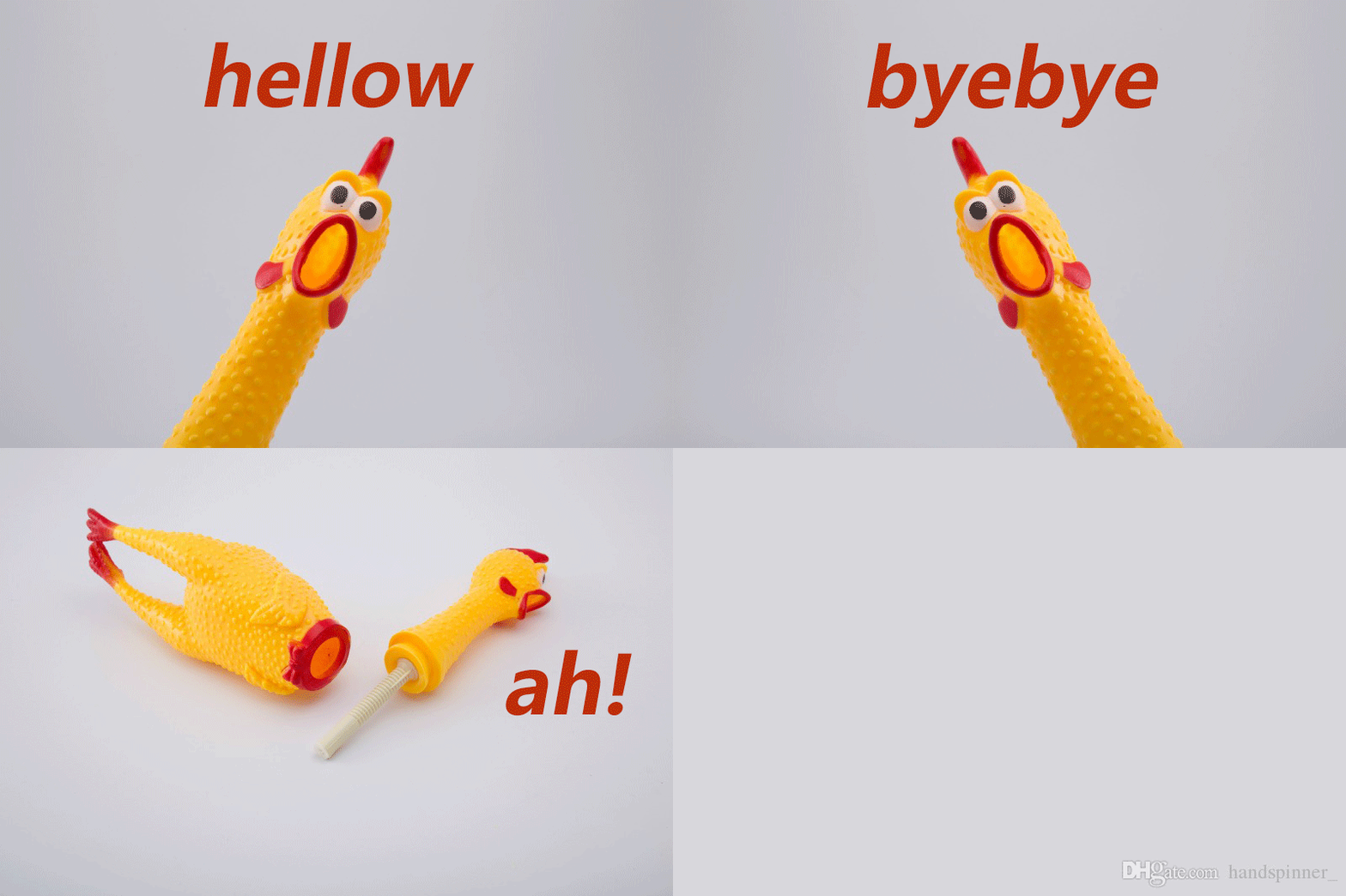
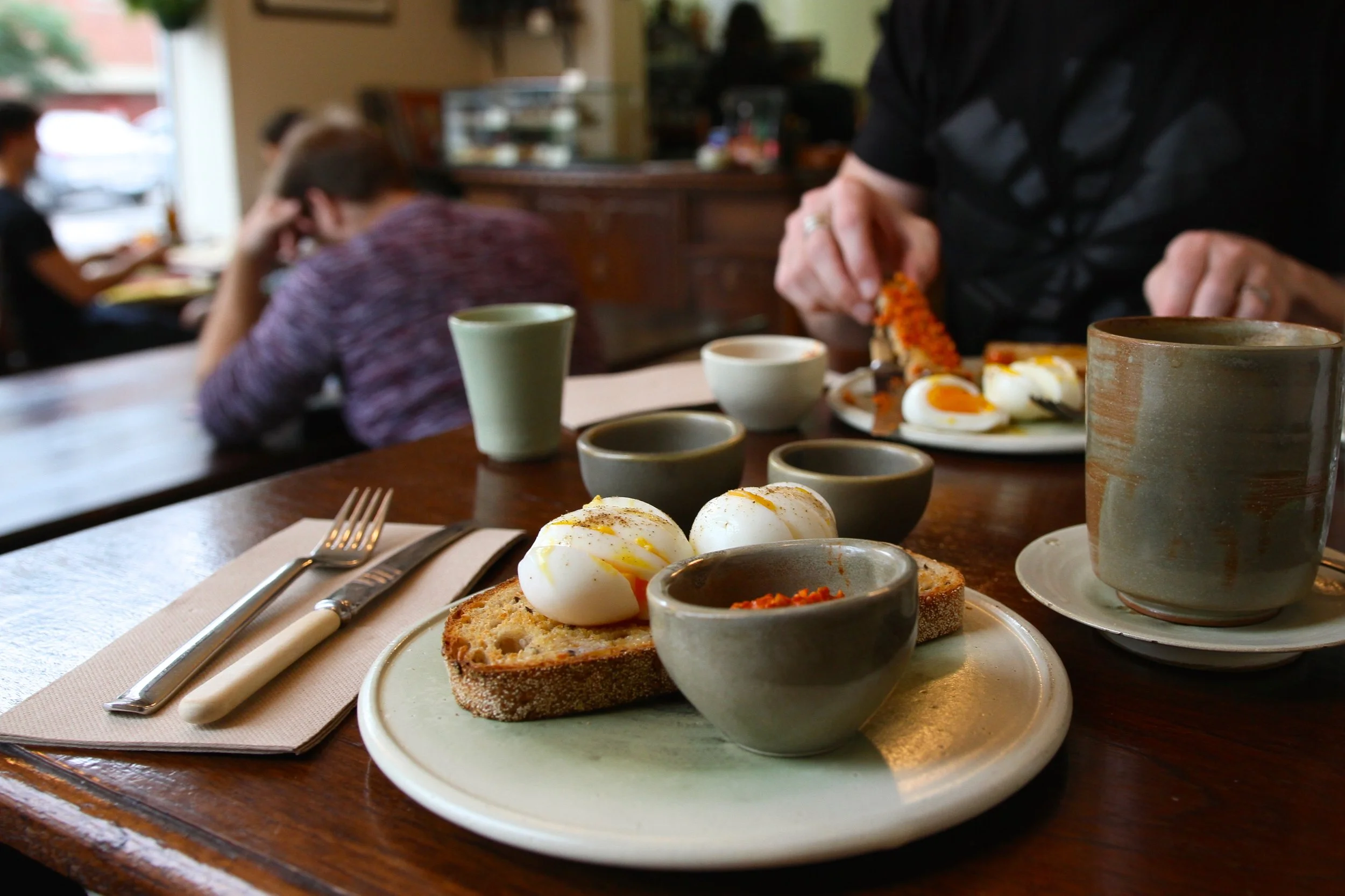
This is us, everyone at TLB, saying a quiet final hellow, and also a big byebye – for we are taking a break! As is customary at this time of the Roman calendar year. We are taking a break to lie down gently and to remove our heads from our bodies for a while, and basically to just not be on the internet as much as possible.
We'll be back 'in the office'/on our emails from January 8th, and will be posting new work from January 15th.
The pitch/submission portals for our Commentary and TLB Review of Books sections will remain open over the break, so do send your ideas/pieces through over here and we'll get to them asap.
If you are fortunate enough to have some kind of break over this period then we wish you goodwill in your downtime, and if you have to work, we hope it all goes okay.
So long and thanks for all the you – for reading the work we publish in our magazine and on this website and also those books we now publish, for submitting writing and artwork for us to consider, for turning up to our events, for entering our prizes, and for just being attentive and friendly.
And soon it's 2018! 2018. We are so excited to share everything we have planned in 2018. Four more issues of our magazine. Queer Some Space at MPavilion. Lots of new books. So much commentary and criticism on our website. Our Experimental Nonfiction Prize. So many events. And even more.
See you in 2018.
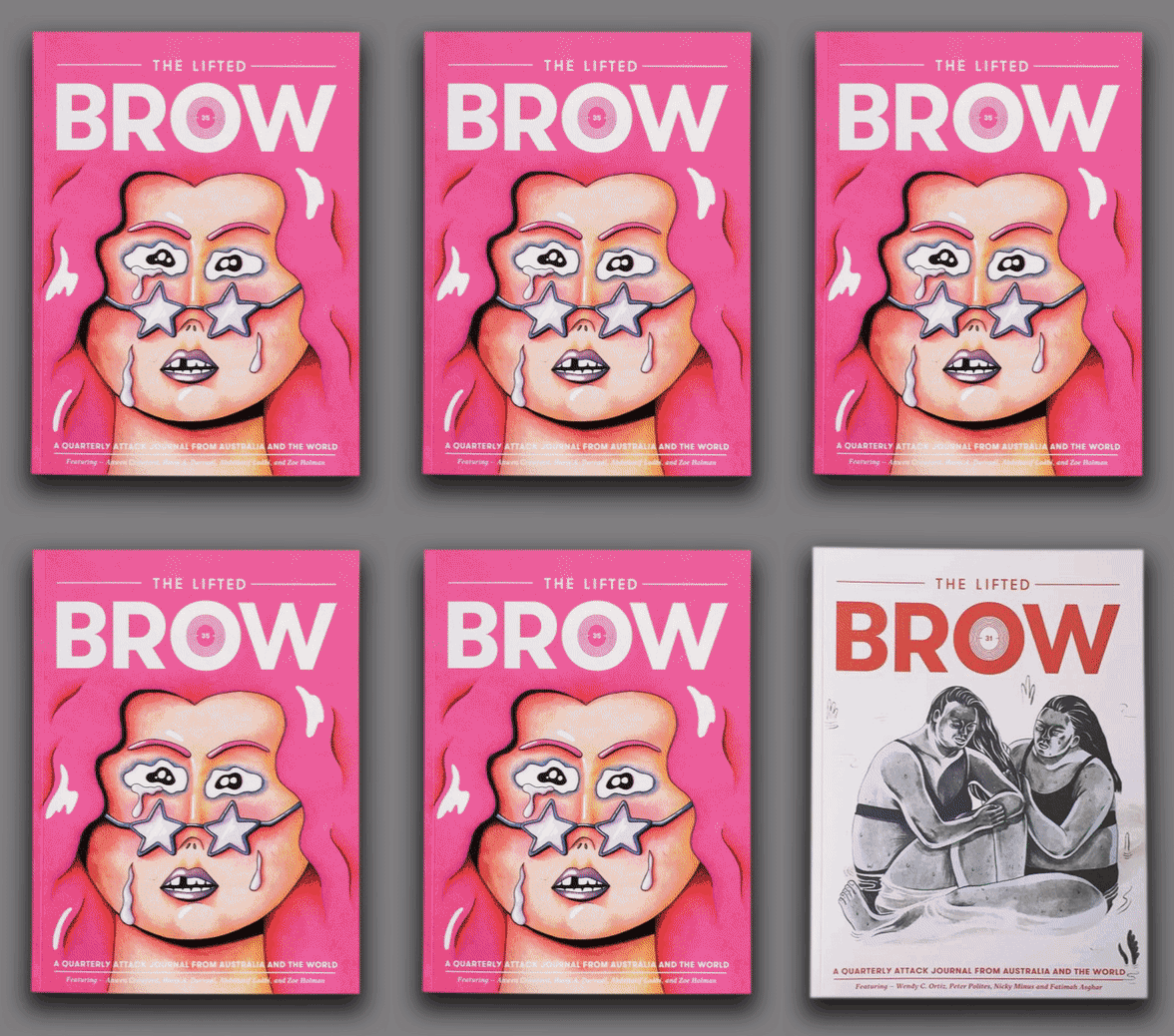
p.s. Buy a copy of our latest issue – it's a really special one.
It's fair to say that here at the Lifted Brow, we like books.
To get in on the fun of end of year lists, we asked TLB Staff to share their favourite book/s of 2017, which we've compiled here in a handy list for your reading pleasure.
My favourite book this year was Alexis Wright's riveting Tracker. I'm beyond grateful that Wright invested what must have been a huge amount of time, energy, creativity and labour into writing it, though you hardly notice her presence as you're reading—she keeps offstage, instead switching in and out of the voices of 49 interviewees whose recollections and anecdotes build this multifaceted picture of the charismatic Aboriginal leader, political thinker and entrepreneur Tracker Tilmouth. I can't stop thinking about it.
And if I can sneak in an honourable mention, that goes to Agota Kristof's The Notebook Trilogy, translated by Alan Sheridan, David Watson and Marc Romano—so brilliant and brutal, and each subsequent book makes you go a bit crazy as you try to nut out how the new perspective fits with, or transforms, what you've already read about the events.
— Elizabeth Bryer, TLB Translation Editor
Not a lot of my reading this year has been new releases and most of the 2017 titles I’ve wanted to read are sitting in my summer reading stack, including Jon McGregor’s Reservoir 13, Gwendoline Riley’s First Love, Gerald Murnane’s Border Districts, and Yiyun Li’s Dear
Friend, From My Life I Write to You in Yours.
But of the books released this year I’ve actually read, I loved The Town by Shaun Prescott, All My Goodbyes by Mariana Dimópulos,
Stories: The Collected Short Fiction by Helen Garner, and Blind Spot by Teju Cole.
— Luke Horton, TLB Review of Books Editor
I came into 2017 armed with high expectations, already anticipating the arrival of books such as The Refugees by Viet Thanh Nguyen, The Best We Could Do by Thi Bui, and Sour Heart by Jenny Zhang. The Guardian reccently wrote that these writers represent an exciting new wave of American literature, and I couldn't agree more.
Closer to home, I really loved Bella Li's Argosy and Claire Coleman's debut novel, Terra Nullius. Terra Nullius is a dazzling feat, masterful in its execution and brutal in its impact. Argosy is less a book of poetry than it is a literary artefact; a multi-modal, form-bending collision of poetics, image, collage and photography. Encountering these pages can be a confounding and surreal experience. As Li says in an interview with Peril: "everything, when you look closely, is strange: people, history, language—language most of all. The more I think about poetry as a genre, the more I see it as a space for estrangement: where language—that which ostensibly provides a common ground on which to stand—can be most thoroughly interrogated."
— Linh Nguyen, TLB Online Editor
It feels a tad disingenuous to write about my hands-down favourite book to be published in 2017, Tracker by Alexis Wright, because I’m only halfway through. So instead let me recommend Pond by Claire-Louise Bennett. An odd and utterly compelling fiction about a woman, alone, on the west coast of Ireland, Pond is a book I read in a greedy, giddy rush last summer, and then came back to again and again across this year, unable to shake it. Its twenty interlinked ‘stories’ – a term that insufficiently conveys Bennett’s unusual form – map her narrator’s life with a care that is excessive to the point of absurdity. Her reflections on food are particularly gleeful – binned dinners, the joys of eating Spanish oranges after sex, almond flakes that one must use cautiously lest they resemble fingernails and ruin an otherwise delicious breakfast. Across the book, everyday objects take on great significance; perhaps my favourite story in Pond is the one devoted to the three knobs of the narrator’s cooker, which are each broken or in the process of breaking, promising calamity.
— Annabel Brady-Brown, TLB Co-Editor
Transit is the inverse of Knausgaard's My Struggle, which is to say it's just as intricately detailed, but skips the ego and self-mythology and is instead calmly and patiently brilliant. The prose is easy, captivating, tantalising: it feels like nothing is happening but it's full of intricate observations. It produces a philosophy, I think, of living with constant change: the narrator doesn't seem perturbed by the ongoing fluctuations in her life, doesn't wish for stasis – in fact she seems to thrive on instability, which is encouraging!
— Justin Wolfers, TLB Co-Editor + Book Editor
Two books that I really loved this year were Michelle de Kretser’s The Life to Come and Jenny Zhang’s Sour Heart. Both are split into long chapters/short stories which are tangentially connected but don’t intersect, and both refuse a narrative centre or plot, instead following characters for a spell and then moving on. Nothing is tied up or resolved, which I found refreshingly true to life. Both books are also full of these casual, wry observations that are not only laugh-out-loud funny, but uncomfortably true. The Life to Come was particularly cutting about Australian identity and liberal white Australia’s implicit racism while Sour Heart was a frank and intimate exploration of the experiences of Chinese-American girls growing up in New York.
— Dženana Vucic, Copyeditor
My favourite book/read of this year is the novel Sudden Death by Álvaro Enrigue (translated by Natasha Wimmer). Set in 1599, the Spanish poet, nobleman and diplomat Francisco de Quevedo and the Italian painter and hooligan Caravaggio confront each other on a tennis court in Rome. For reasons neither can quite remember—they’d separately and then together been on a bender the evening before—theirs is not just a grudge match but also a duel. And, though neither is aware of it, they are playing with a ball made from the hair of Queen Anne Boleyn of England, beheaded 63 years earlier. Game by game, set by set, this tennis match—a product of the author’s imagination, not of the historical record—advances, interspersed with asides and excursuses that reveal Mr. Enrigue’s presence and purpose.
I love the taut messiness of this novel, I love its ingenuity, I love its digressions of metafictional incertitude. A line in the middle of the book says that “the function of a novel is precisely that: to name what is lost, to replace the void with an imaginary archive”. Another passage later: “I don’t know what this book is about. I know that as I wrote it I was angry because the bad guys always win. Maybe all books are written simply because in every game the bad guys have the advantage and that is too much to bear.” To read Sudden Death in 2017 feels incredibly timely, and in the same instant timeless: hopeful and hopeless about the world around, like we’ve always been.
— Sam Cooney, TLB Publisher
I have a very clear favourite: Memoirs of a Polar Bear by Yoko Tawada. A remarkable story narrated by three-generations of polar bears, it's about empathy, the immigrant journey and the inheritance of predetermined relationships with animals.
I chewed through all of Han Kang's translated works: The Vegetarian,Human Acts and her most recent title, The White Book. Poetic writing about brutal trauma, Kang is remarkably skilled at inviting the reader into the story. Both Nadja Spiegelman's I'm Supposed to Protect You From All This and Jenny Zhang's Sour Heart were immaculated structured stories of family and identity. Lastly, Svetlana Alexievich's The Unwomanly Face of War was a harrowing read about Russian women in the second world war, where Alexievich prioritises history as much as the emotions of women.
—Marta Skrabacz, Commentary Editor
My favourite book the year was The Idiot by Elif Batumen. I have a thing for bildungsromans and for debut novels, and the witty, self-deprecating style of this novel turned both of those kinks on their heads: maybe nothing is learned by the characters, but the writing is egregiously clever for a first book.
—Lachy McKenzie, Fiction Editor
I don't usually go for collections of short stories, but I adored Australia Day by Melanie Cheng. The stories are unpretentious, diverse and, a lot of the time, disconcertingly real. Cheng's characters are just as well realised; they live on in your head long after you've put her book down.
—Oscar Johnson, TLB Website Manager
Part historical account of computers and computer languages, part philosophical investigation into what an ontology of the “digital object” might look like, I haven’t been able to get Yuk Hui’s On the Existence of Digital Objects off my mind this year. A digital object is data - any object which takes shape on a screen (this recommendation for instance). It evades existing philosophical accounts of objects based on appearance given it’s shape-shifting qualities and foundation in computer-speak, but cannot be thought through computer science alone, which conceptualises it as a mere conduit for information and representation. Driving this book is a concern with the disjunct between technology and culture (whereby technologies intended to bring us closer to one another more often than not propagate isolation and alienation from others) and an attempt to think their reconciliation.
—Caitlyn Lesiuk, Social Media Manager
Actually my favourite book this year is The Town but that would be gauche to talk about.
Summer hols are just around the corner. If you're trying to figure out which books to pick up, and which to avoid, we at TLB Online might be able to help. We've compiled a list of the most exciting, memorable and contentious pieces from the TLB Review of Books in 2017. This year has seen an exciting array of reviews, across a bunch of innovative genres. (Shout out to Jini Maxwell for writing our first review in hypertext; the future is here and it contains drawings of bin chickens.) Narrowing these incomparable reviews down to a shortlist was challenging. We've picked the ten that we think best represent the huge stylistic and formal range we've seen this year in our reviews.
2017 is moseying on out so it's just about time for the TLB Online team to take our short holiday break. But before we do, we'd like to look back one last time at the incredible work we've published this year.
We asked our online editors to nominate their very favourite commentary pieces and series of the year and whittled them down to a mean, lean list of thirteen.
These gems will help you stave off holiday boredom for a little while at least. But if you burn through them – and who could blame you? – you can check out our commentary page or search our archive for more incredible articles.
When we were still young children, my brother and I spent our holidays in Yorkshire, where my parents would rent a holiday cottage and take us on long walks in the countryside. As most childhood memories are, my recollections of the time are hazy, fail to take shape, devoid of characters other than my immediate family. Specific events are hard to recall but the atmosphere and the feeling lingers still. Though we would have been on summer holidays, Yorkshire comes back to me as a dark, dank and brooding landscape where I could play freely in the mud, spot horses battered by the wind in fields and see the occasional sheep carcass caught and abandoned in barbed wire along hedgerows. I was still small enough to believe in magic and watched the weather change with care, as though I could read the woodlands and the wildlife around. Yorkshire’s landscape is one where it’s easy to imagine England’s heritage, long before Empire, industrialism, Elizabethan poesy, even Tudor excess. This was the country of Robin Hood, Merlin, Boudicca, where our Celtic ancestors reigned and pagans left bodies dead and punished in the peat. Deep England, West Riding: the stage for Arthurian legends and the lustre of gold torques, so long ago it becomes hard to fathom chronology or timelines.
Yorkshire still cuts a peat-black figure across the national consciousness, as close to any wilderness we ever possessed, a direct line back to myth and legend, heavy and anchoring compared to the sparkling, heaving, glitching capital of stock markets, multiculturalism and twenty-four-hour news channels. Yorkshire is lore: the dead sheep and the cowpats, the ferns and stone walls, thick accents and ales, wax jackets and wellies, the damp and the cold, the mulch of wet leaves across seasons and secrets buried in mud. Yorkshire is a myth and an atmosphere in the English mind – one mined by Fiona Mozley to devastating effect in her haunting Booker Prize-shortlisted debut Elmet:
And if the hare was made of myths then so too was the land at which she scratched… The soil was alive with ruptured stories that cascaded and rotted then found form once more and pushed up through the undergrowth and back into our lives. Tales of green men peering from thickets with foliate faces and legs of gnarled timer.
Elmet charts the demise of a fringe family who build a house on land they cultivate but do not legally own. Daddy, Cathy and Danny live off the woodland surrounding their house, brewing their own cider, catching their own small game and whittling their own tools. Daddy makes his money from bare knuckle boxing matches across the country with gypsies and working class men. He leaves Danny and Cathy’s education in the hands of Vivien, a single woman who schools them from her home nearby. But the isolation and peace of their “strange, sylvan otherworld” is threatened by the landlord of the land on which they have built their home. Mr. Price and his sons descend in Land Rovers and Barbour jackets, demanding rent or payment of another sort: illicit work intimidating tenants or fighting for bets, as Daddy used to do for him years ago. Daddy objects and the family try to mount a resistance, gathering together support from other local tenants sick of rent hikes, from illegal labourers who demand higher pay. The unionising appears to hold promise for resolution, but the strife between Price and Daddy is personal and is what ultimately drives Elmet to its bloody conclusion, leading to the dissolution of the family’s brittle realm.
‘Elmet’ was the name of the last Celtic kingdom of Britain, whose territory roughly comprised what is now known as the West Riding of Yorkshire. The title serves as a mainline into the Yorkshire lore Mozley so heavily relies upon, also referencing the work of Yorkshire poet Ted Hughes – an extract of his Remains of Elmet appears as the novel’s epigraph. Mozley’s skill lies in the consistency of her vision of this land and kingdom – allusions to the modern world are vanishingly rare – evoking the atmospheric landscape with minute geographical detail and long descriptions of Danny and his family’s handiwork: whittling, washing, plucking and coppicing. It sounds dry, perhaps, but rarely does the narrative lose pace, nor does the telling feel laboured; instead, in the family’s toil, the spectres of paganism and erstwhile societies loom large, suggesting Daddy, Cathy and Danny as descendants, vestiges of legendary, ancient kin – the last of an embattled kind.
The evocation of Elmet also foretells the central tragedy of the novel – of loss and injustice – the eventual defeat of a kingdom by newer, more modern, more bloodthirsty threats. The fall of a kingdom is not just the loss of the right to reign but also the loss of a culture, a tradition, of lifestyles and skills, of claims to land that are more physical than the abstractions of land deeds and legal challenges. The family cultivate the land they live on, build a relationship with the surrounding landscape, care for the area of woodland with skills that have long been lost to the majority of the population. Yet Price, the landlord, still demands his money. He still intimidates. Comes with his boys who intimidate Danny and badger Cathy. He comes out of his own greed for control, through his disdain for the working class Daddy and his children, for the dirty work he can make a man he considers inferior do for him, for the profit and the sway. Because to Price, Daddy and his children are not simply unworthy of compassion, their lower class is physically repulsive to him. He terrorises the family from their home like hounds hunt foxes from their dens.
It’s easy to make much of Elmet’s canonical and mythical nods – easy because there are so few recognisable contemporary references. The Land Rovers and train lines suggest the novel takes place at least in the latter half of the twentieth century; only the invocation of the “Adelantes and Pendolinos that streaked from Edinburgh to London” place it in the twenty-first. But many of its concerns come from a very twenty-first century author. Mozley is twenty-nine; she worked on the novel for most of her late twenties while working at a literary agency in London then while pursuing her PhD in York. Widely reported in the press was how the novel came to life, partially tapped out on Mozley’s smartphone during her daily commute. Some of the rage (and there is rage in Elmet) comes from her sense of frustration at the slog of living in the capital. “I was probably quite an angry young woman”, she told The Guardian, for being part of a generation who are “paying all of our salaries to other people for no clear reason.” In the Evening Standard, she recommended Theresa May read the novel. It was just months after May’s anaemic show of compassion for the victims of the Grenfell Tower fire, whose scorched shadow on the skyline of London has become a symbol for the housing crisis in the capital, where dilapidated mansions lie empty but council houses are packed precariously to the rafters, the assets of the wealthy safeguarded more than the lives of the working class.
Elmet’s pertinence to modern discourse does not end with questions of inequality, land and ownership; Mozley’s exploration of gender and blurring of biological binaries makes Elmet thoroughly contemporary. Without such treatment, the work could easily read as a wholly more traditional narrative – there is, after all, nothing inherently unconventional about the story of a white working class man’s struggle to get by. That man serves as the axis on which the gender of his children is charted and bent. Daddy is archetypal manhood manifest: towering, broad and virile, fighting and hunting and brooding. No one would bet against Daddy, Danny recounts, because Daddy was the best in the land. In stark contrast, Danny, the teenage son who narrates the novel, reads as almost unmistakably female. He occupies the domestic sphere, busies himself with homemaking, horticultural duties, household chores. He does the laundry and the washing. His hair and nails are long. It is Cathy – her name a nod to the unearthly protagonist of Wuthering Heights – who takes after her father. She possesses inexplicable strength, stays as silent as her father, smokes her roll-up cigarettes and skips Vivien’s classes to go walking about in the woods. Mozley moulds the narrative to work the same way as the characters’ physical isolation: we are reminded of Danny and Cathy’s genders only when they interact with figures outside of the family nucleus. Price’s boys direct all their questioning at the brother, while ignoring the sister except when they make advances to her. When a spectator of Daddy’s boxing match eyes up Danny, he remarks on the boy’s queer look, ridiculing his failure to take after his father. When he goes through Vivien’s wardrobe and underwear with the gaze of a girl examining the artefacts of her mother’s femininity, carefully eyeing up the fit of the clothes, Danny attests to his own gender non-conformity: “You have to appreciate that I never thought of myself as a man. I did not even think of myself as a boy. Of course, if you had asked me I would certainly have replied that that was what I was. It is not as if I had ever actively rejected that designation. I just never thought about it.” It’s a somewhat gratuitous observation which betrays the insecurity of a debut writer trying to make sure the point is heard, insuring herself of the message; it is one of Mozley’s rare missteps.
If Daddy acts out the rage of the dispossessed working man and Danny experiences the confusion of gender introspectively, it is Cathy who externalises the wrath of women oppressed and harassed. And it is with Cathy that Mozley’s work to kindle the legends and lore of the wild country pays dividends in a conclusion that is at once more beautiful, more bloody and wholly more radical than the gratuitous bloodbaths of modern pop culture. If Danny questions his gender designation, Cathy does not question hers, only fights the constraints of it. She has inherited the traditionally masculine character traits of Daddy but acknowledges to Danny that she will never be able to use her father’s tactics to the same effect; she struggles against the femininity of her body and the entrapment that comes with it as it grows. She’s aware of the male gaze on her – from Price’s sons, from his men, from boys in her former school – and senses the greed in their entitlement to her attention, her subservience and the danger in her rejection of them. She’s aware that one of them will come for her eventually, inevitably, like Price does for Daddy, and that, when he does, he won’t heed no for an answer. And she is angry in the face of it all – an anger that is familiar to women, is too often repressed, too seldom finds its outlet. In Elmet it finds its outlet. Cathy is the heir to her father’s violence, his legendary strength, and it is she who continues the myth, who holds the rage that drives the tale to an end; she possesses the power to maim and to kill, to fight and to venge, covered in blood and letting the Earth scorch beneath her feet, quite literally. And as the flames dance in her heroine’s eyes, Mozley achieves no small feat with her debut, writing herself into a canon with a tale that is both timely and innately timeless.
Rachel Wilson is a writer and translator currently based in Berlin whose work has appeared in The Guardian, Broadly, i-D, The Lifted Brow, Fusion and more.
“People are always, yet never, at home.”
—Marc Augé, Non-Places: Introduction to an Anthropology of Supermodernity
I'm sitting in a brand-new cafe close to where I live, bordering the suburbs Mile End and Torrensville in Adelaide. Warm lighting casts a soft glow from the coffeee shop 24/7 (a lone, happy fixture on Henley Beach Road, even past midnight); bulbs encased in wire-frame shades hang from wooden beams, daylight is siphoned from outside via glass panels that serve as both doors and windows. This suburb, like so many neighbourhoods before it — places my wealthy white ex-employers call “dero” — has become victim to the neoliberal claws of gentrification. An organic grocer stands amidst African hair salons and Vietnamese lunch bars, its gaudiness matching its neighbours, hand-painted signs jostling for attention.
A flat white sits in front of me, its latte art a perfect laurel, like the flat white I had in Penang four years ago, like the flat white I had in Prague two years ago, like the #flatwhites dotted across the Instagram landscape in Nanjing, Budapest, Turku, Chechnya.
Where was I? Sometimes I could hardly know.
~~~
Keiichi Matsuda's short video “Hyper Reality” takes place in an unspecified near future. The film presents ‘a provocative and kaleidoscopic new vision of the future, where physical and virtual realities have merged’. A meditation on the saturation of digital and augmented media onto our daily lives, the narrative follows a person as we peer into their life. Screens are superimposed on top of daily banalities — as the protagonist rides a bus, walks on the street, and shops in the supermarket they are constantly engaging with a points system in relation to their existence. Here, life is like a videogame; you are assigned menial tasks (grocery shopping, proof-reading, caring—presumably for others richer in points than you) to level up and gain more status. When idle, the protagonist occupies themselves with a Candy Crush-esque interface to win bonus perks, like a free coffee. At one point, they contemplate “resetting” their identity — losing all progress they've gained, starting over from zero — only to change their mind. Surrounding street signs are in English, and the protagonist converses in Spanish to a customer service rep. We learn that they are in Medellín, Colombia. However, it seems that these scenes can be taking place anywhere. Matsuda envisages a future where the whole world is moderated by the same technology, where each city only slightly different from the last, like a funhouse of mirrors repeating the same images in a constant loop.
As globalisation becomes even more widespread as a result of an interconnectivity writ large, urban centres around the world are starting to look more and more like one another. In the decades after WWII, as politicians across the world rushed to break down borders hampering trade, brands like McDonald's and Ikea led the way: the satisfying bite into a Filet O' Fish became available anywhere, everywhere; the simple aesthetic of a Lack table dotted houses in cities worldwide. Friends in Jakarta, Berlin, Melbourne and Hong Kong have the same Expedit shelving unit for vinyl LPs, most likely a consequence of some unnamed genius' repurposing of what was meant to be a mere ornamental shelf — later Facebooked, Tumblrised, and Instagrammed all over. From this point, the connotations behind capital become more elastic yet more vague, monetary capital expanding and folding into the social and cultural spheres. Cafes, bars and living spaces start to resemble one big franchise, mediated by digital connectivity.
~~~
When French philosopher and cultural theorist Jean Baudrillard wrote Simulacra and Simulation in 1981, he wasn’t so much portending the near future as much as he was commenting on the rise of mass media, consumerism and hyper capitalism experienced by the early 80s. Baudrillard was reflecting on the phenomenon of mega-centres like Las Vegas and Disneyland—sites which enabled visitors to feel like they could provide 'more reality than nature can'. Yet, fast forward three and a half decades later, and the signs of what he conceptualised as “hyperreality” (a condition in which reality and fiction are so intertwined it's uncertain where one ends and the other begins) feels even more real. We're witnessing the vested search for an authentic identity exploding and collapsing unto itself. As Baudrillard writes:
'reality itself, entirely impregnated by an aesthetic which is inseparable from its own structure, has been confused with its own image. Reality no longer has the time to take on the appearance of reality. It no longer even surpasses fiction: it captures every dream even before it takes on the appearance of a dream.'
In our digital age, images and realities are being broadcasted on an instantaneous level, up for grabs to just about anyone in the world with an internet connection. In 2017, Baudrillard's hyperreality is no longer confined to one particular location, but rather its virality is apparent in the way its tentacles are spreading outward, whether that's through #minimalism (7,600,000 strong at time of writing), /r/RoomPorn (560,000 subscribers) or simply aesthetic.tumblr.com. Like places of worship and airports, a small bar in Singapore can look like another in Portland or in London, its patrons dressed eerily alike.
This strange global phenomenon of uncanny likeness is what US cultural critic Kyle Chayka calls “AirSpace”: 'the realm of coffee shops, bars, startup offices and co-live/work spaces that share the same hallmarks everywhere you go: a profusion of symbols of comfort and quality, at least to a certain connoisseur mindset.' Coined from closely observing the evolution of the Airbnb aesthetic worldwide, this aesthetic is characterised by wooden floors, big windows, refurbished and exposed brick, celebrated in lifestyle magazines such as Kinfolk and Monocle. Airspace is marked by interchangeability, frictionless exchange, and symbolic blankness. It's a living room with a pile of vintage suitcases neatly placed in a corner; it's furniture made from shipping pallets, cinder block shelves, a cluster of mismatched picture frames adorning a wall above a fireplace. By claiming to be “authentic” in their uniformity, these markers denote a sense of less that, in our era of excess, ironically feels more real.
And who represents this so-called connoisseur? From a glance, it is easy to infer that they are almost always white, educated and upwardly mobile. The phenomenon of Airspace represents gentrification gone viral, as a globalised hyperreality operates in tandem with taste-making and creation. In the rush to pursue this version of “global citizenship”, it is important to ask, who:
1) gets to gain entry?
2) gets evicted?
3) benefits?
4) defaults?
When taste and taste-making becomes globalised, at whose expense will this come at? The globally affluent, the purveyors of this specific 'global sameness of taste' may revel in the fact that they can seek comfort in more and more places across the globe, but this comes at a price: other selfhoods either fail to measure up or are pushed out. Ghosts remain. As Chayka comments: ‘you either belong to the Airspace class or you don’t.’
In a time of Marie Kondo-style decluttering, negative space becomes synonymous with abundance: a minimalist way of life affects a sense of conspicuous affluence modelled after the cosmopolitan western world. What happens when Beijing looks like Paris looks like Sydney looks like Lagos looks like Helsinki looks like Kuala Lumpur looks like Montréal? Already, as Chayka observes, 'it's possible to travel round the world and never leave Airspace. The homogeneity of these spaces means that traveling between them is frictionless... Changing places can be as painless as reloading a website. You might not even realize you’re not where you started.'
~
These spaces surround me more and more the longer I exist in wealthy, so-called “developed” societies. I'm at once drawn to them, yet simultaneously repulsed—their stoic exteriors are a symbol of a class that I have one foot in and the other foot out of. The punk warehouses of my early adulthood are gradually transforming into commodities enjoyed by all––a temporary escape into a kind of culture that appears revolutionary while teetering on the edges of the universal. Friends in Singapore are priced out of their temporary homes one by one, as scummy neighbourhoods make way for cheap business opportunities with just the ‘right kind’ of edge. Meanwhile, Mad Mouse Alley (arguably Adelaide's best community centre) shuts down after two years, its landlord eager to plagiarise its non-profit model for profit. Our mate Shep's artwork is painted over with white. In one fell swoop, communities of migrants, misfits and agitators lose a sense of tangible rootedness as meeting spaces disappear.
My interstitial self looks upon these losses always with despair. I flit in and out of bright white art venues, my Southeast Asian face a curious anomaly, hyper-visible yet invisible. Opening my mouth to speak, my hybridised accent skews western, saying all the right things. I may not have a university degree and earn only twenty-four grand a year—some weeks barely making rent—but I am light-skinned and rich enough in the language of the colonisers. Even as I write, capitalism threatens to commodify my lived experience.
~
Currently, North American seed accelerator—'the world's most powerful startup incubator'— Y Combinator is carrying out a research phase to study building new, ‘better’ cities. Their website proudly proclaims: 'it's possible to do amazing things given a blank slate'. At the same time, Facebook has released plans for a 'mixed-use village' in Menlo Park, California, where their headquarters are located. The development plan calls for nearly two thousand residential units, as well as grocery and other retail stores, a pharmacy, a hotel, and office space. What will these vicinities look like, and who will they serve? Already, cities are transforming at alarming rates as late-capitalism scrambles to optimise the day-to-day lives of its producers. One of the questions Y Combinator asks of its participants is this: “How should we measure the effectiveness of a city? (what are its KPIs?)”
Closer to home, urban planning continues unabated under the guise of change. New “master-planned” cities in Australia are silently rising up from the ashes of farms and Aboriginal communities. From Queensland's Norwell Valley (to house a Chinese-owned Disney-esque theme park, and “Silicon Valley-type activity”) to Western Australia's Lake Argyle in the Kimberleys (plans include an international airport, pegged to be the country's “second capital” and “first mega city”), the concept of terra nullius rages on. Business as usual. Further afield, existing cities continue to see gentrification as a means to eliminate/assimilate those least desirable into capital's progress—the histories of areas like Redfern and Fitzroy are testament to the fact. This fair continent we call “ours” keeps building upon its ghosts, layers and layers of gold atop blood and unaddressed displacement. Thomas Hickey's murder in Redfern continues to haunt and juxtapose its 1.4 million property valuations; towns like Oombulgurri are forcibly closed on the grounds of it 'no longer being viable'. How many other names do we not know? The ones who cannot be eliminated are locked up; in Kelly Lytle Hernandez's City of Inmates, she writes: 'Prisons are used to exterminate a certain population with the intention of gaining access to their land.'
~~~
When cities and neighbourhoods pursue linear goals in order to look like one another, Baudrillard's hyperreality inserts itself deeper into our cultural narrative. Sets of signifiers are created to represent things which do not actually exist—as one sits on a replica Eames chair, they're hoping an intimate distance to markers of taste will align them closer to cultural capital.
Is it possible to form a global community without sacrificing local specificity? As Chayka notes: ‘if taste is globalized, then the logical endpoint is a world in which aesthetic diversity decreases.’ When personal brands become indistinguishable from corporate branding, and when societally produced objects signify prestige through a certain decorative excess—“taste” is exerted through a homogeneous way of externalising oneself. These unspoken markers continue to project itself through ways of living and consuming, as taste-makers put themselves in a position to teach others how to feel the right things.
Indeed, this myth-making trickles down further. As taste gradually becomes the same everywhere, borders blur, but only for those who make the ‘cut’. In the same way how a cafe in Hanoi can look like another in Beijing, both replicas of those in the white western world, a form of “colour-blindness” occurs: I'll enter a space to align myself closer to whiteness, my taste in books (Murakami), films (Wes Anderson) and dress sense (chinos and loafers) a cloak to hide my Otherness while white society pats itself on the back for my presence. If I don't mention it, I'm safe––mentioning my difference only points out my difference; concurrently, my Otherness adds value to the neoliberal conversation surrounding multiculturalism and diversity.
It's business as usual, but given new names. Globalisation continues to build on ongoing empires in the guise of reinvention, borders and boundaries appearing seamless only for those who subscribe to makeshift cultural codes. Invisible dotted lines keep guard, demarcating who's in, while keeping undesirables out. And as our dystopias look more and more like each other, placelessness haunts every street, both as a spectre and a foreboding of the future.
Cher Tan is a freelance writer in Adelaide. She writes mostly on tech, identity, politics and culture. Her work has previously appeared in Kill Your Darlings, Right Now, Roads and Kingdoms, VICE, Catapult and Overland, amongst others. Follow her on Twitter @mxcreant
Each issue, Benjamin Law and his mother Jenny dispense advice on sex and friendship. The longest-running regular column in The Lifted Brow, since 2011 the ‘Law School’ column has been offering stern warnings, enthusiastic encouragement and sage (and not-so-sage) wisdom to desperate lovers and sexual adventurists alike.
Dear Ben and Jenny,
I moved states for uni and thus haven’t lived with my younger brother for a few years. He’s about to finish school and has decided he wants to come to Melbourne too. One of my housemates is moving, so it seems convenient he move in with me next year. Convenient all for the fact we might end up fucking in bedrooms next door to one another! Ick. I slept in a shed out the back of our family home during high school – no chance of him bumping into his sister’s post-sex partners there. Plus he was around fourteen when I left home, so I’ve never really considered him a sexual being before. Is this going to be too weird?
Thanks,
Sibling distress
BENJAMIN: So my siblings and I don’t have hang-ups talking about sex. But for some reason, if the conversation veers to our own sex lives—personal, specific details—we immediately shut that shit down. The moment we see/hear/smell any evidence, we basically just scream and scream and scream. But you don’t need to worry: no one wants their sibling to know they’re fucking someone in the next room. Scope the possibilities of sleeping at your respective dates’ places, and if that ain’t possible, give your date the heads-up and give your sibling the same. (This might also be the time to invest in earplugs or noise-cancelling headphones.) Also: don’t be hung up about the inevitable breakfast table meetings: the joy of this situation is you can happily milk that awkwardness for all it’s worth. It’s your job as a big sister.
JENNY: If you decide you want your younger brother to move in with you, then you should expect that all these “sexual things” will happen. With all the sex culture in Australia (there’s drink culture; sex culture) I don’t think it’s a big deal, is it? Will it be awkward and embarrassing? It depends on the other person’s personality – the sex partner’s personality, especially at the breakfast table. “Oh you’re the one fucking my brother/sister the previous night!” How they react might actually be a good test in terms of their character! Still, I understand. Ben’s baby sister was at our sex advice book launch and said, “I’m scarred for life” even hearing the smallest details about his sex life. And that’s just listening about his sex life, not hearing the sex noises. (Ew. Ugh. Ooh.) It really depends on how close you are with your brother, but I guarantee you’ll hear all the noises. But remember: you can both fuck at your partners’ place too!
Dear Ben and Jenny,
I’d really like to start experimenting with sex toys, but they’re all so expensive! Further, most of them are manufactured unethically, right? Is it okay to shoplift from sex shops? Is it okay to reap the benefits of sex shops at all? Do you know of any cheap and ethical manufacturers of sex toys…? Probably not.
Kind regards,
Sex flop
BENJAMIN:
It’s true: decent-quality, ethical sex toys are expensive. You know why? BECAUSE YOU’RE GONNA PUT THEM INSIDE YOUR HOLES. If you wouldn’t put cheap, factory-made, ethically dubious, nasty-smelling, chemical-smeared food in your mouth, why would you put a $25-made in China novelty dildo in your ass? Ethically made sex toys can be bought at online retailers like Vavven (vavven.org) and Ethical Sex Toys (ethicalsextoys.co.uk), and in Australia, Mia Muse – a Melbourne-based sexologist and educator – sells terrific toys for women and men. You’re right: they ain’t cheap. But if you have a partner, find the toy you want and demand it next Valentine’s Day. If you’re single, look at your calendar now and mark out your next birthday or a work milestone. Work out how many weeks are between now and then, and how much money you’ll need to put aside each week. Treat yo’self to that obsidian hand-crafted dong. Then celebrate, knowing you’re caring for the earth, human labour laws, as well as your cooch.
JENNY: Ooh, I recently watched a documentary about sex toys on SBS, about this company started by two guys in America. You can go online and look for it. FYI: sex toys can be recycled. Are you surprised? I was! The machine will chew them up into fine particles and they go back to make more sex toys. Ai-ya, the documentary is very informative, educational, and so much fun to watch. Everyone should watch it! Anyway, I think you should enjoy sex toys to the max-lah. And go hunting far and wide: you never know – the price might surprise you! This day and age you can find anything online, correct? Ask family and friends. Ask your grandparents. Okay, maybe not family. Just kidding. Oh dear. Also, my god: never shoplift from sex shop. I am shocked you asked me this. Never shoplift from anything, not even lollies, not to mention sex toys. You want to get famous on the front page or on social media … HOLDING A SEX TOY?
This piece is published in full in The Lifted Brow #36. You can purchase a copy here.
Benjamin Law is a Sydney-based TV screenwriter, journalist and newspaper columnist. He is the author of two books, The Family Law (2010) and Gaysia: Adventures in the Queer East (2012), both of which have been nominated for Australian Book Industry Awards. The Family Law is now in its fourth reprint, has been translated into French and is now a major SBS TV series.
Jenny Phang was born in Ipoh, Malaysia, and is the mother of five children, including The Lifted Brow writers Michelle and Benjamin Law. She lives on the Sunshine Coast in Queensland.
Do you accidentally get turned-on while watching a nature documentary? Are you dating someone whose tattoos are the worst but you’re having the best sex of your life? Are you feeling emasculated because your girlfriend has had more one-night stands than you? Never fear: the world’s first mother-son sex and relationships advice duo is here to save you from yourself.
The longest-running regular column in The Lifted Brow, the ‘Law School’ column has been offering stern warnings, enthusiastic encouragement and sage (and not-so-sage) wisdom to desperate lovers and sexual adventurists alike in every issue of our magazine since 2011. This collection brings the best of ‘Law School’ out of the shadows of the literary back pages and into an excruciatingly funny and semi- explicit illustrated book of advice you never knew you needed.
Hilarious, rude and surprisingly heart-warming, Law School covers the practical and ethical dilemmas of sex and relationships from two generational and cultural perspectives. Ben and his mum Jenny challenge the way we think and talk about the intimate, and all in funny, earnest and blunt banter. Their advice will either save your sex and love life, or ruin you forever.
Purchase a copy of Law School: Sex and Relationship Advice from Benjamin Law and his mum Jenny Phanghere.
About the Artist:
Beatrix Urkowitz lives in Providence, Rhode Island. Her comics and illustrations have appeared in The Lifted Brow and on Hazlitt, and can be seen at bmfu.net.
Berry dips in and out of personal recollection and historical detail gracefully; I am tempted to say she makes the city her own, but her writing isn’t so entitled. Unlike many alternative accounts of space, particularly punk spaces, Berry seeks neither to historicise or reify the city she records.
'By Numbers' is a recurring feature that appears in our print magazine – where we use numbers in a snapshot way to try and reveal the true breadth and depth of an issue. This ‘By Numbers' on Australia's Offshore Detention System, using the most recent data available at that time, was originally published in March 2017 in Issue 33 of our print magazine.
Estimated number of refugees settled in Australia between 1901-2016: 854,23 Year last vestiges of the White Australia Policy were removed from immigration policy: 1973 Year of first person seeking asylum in Australia, arriving by boat: 1976 Number of skilled stream permanent visas provided by Australia between 2015-2016: 128,550 Of refugees resettled in Australia through UNHCR: 17,555 Estimated annual revenue generated by visa applications: $1,914 million Estimated number of people forcibly displaced worldwide as a result of conflict and persecution across 2015: 65.3 million Number of recorded deaths on migratory routes worldwide in 2016: 7,509 In Southeast Asia: 156 Number of deaths associated with Australia’s borders since 2000: 1,991 Of drownings: 1,905 Of suicides: 22 Australia’s (nominal) GDP world rank: 19 Papua New Guinea’s: 111
Nauru’s: 195 Average cost of holding one person seeking asylum in offshore detention for a year: $500,000 Of settling one person in the community for a year while their claim is being processed: $15,000 Average number of days people seeking asylum spent in immigration detention centres: 478 Proportion who have been detained for more than two years: 23.6% Number of women seeking asylum who miscarried in Manus, believed to be attributed as side-effect of anti-malarial medication: 3 Number of washing machines available in Nov 2013 to the over four hundred men housed in the Foxtrot compound of Manus: 1 Number of incidents of self-harm in onshore detention centres between July 2014-2015: 706 Estimated medical cost per person of treating mental illness provoked by prolonged detention: $25,000 Number of times Faysal Ishak Ahmed sought medical help on Manus in the two months before he died: 13 Incidents of child abuse recorded between May 2013-October 2015 in Nauru: 1,086 Countries other than Australia that indefinitely imprison children seeking asylum: 0
Sources: Missing Migrants Project; The Refugee Council of Australia’s report ‘Refugee Needs and Trends: A Statistical Snapshot’; Asylum Insight; the Asylum Seeker Resource Centre; Australian Department of Immigration and Border Protection, ‘Year at a glance: 2015-2016’ and ‘Immigration Detention Statistics for 31 December 2016’; Madeline Gleeson, Offshore (NewSouth Books); ‘The Messenger’Podcast, from Behind The Wire and The Wheeler Centre; The Australian Border Deaths Database by The Border Crossing Observatory; Australian National Audit Office report ‘Offshore Processing Centres in Nauru and Papua New Guinea: Procurement of Garrison Support and Welfare Services’, 2016.
The Manus Island processing centre was offiially closed on October 31, 2017. Refugees in Manus prison were forcibly removed from the facility on November 24, 2017.
How did I get to thirty without several doomed and haunting love affairs? I mean all my romantic relationships failed, except for this one I’m in right now, and most of them failed miserably. But their failures were not at all poetical. The older I am, it seems, the less doomed. I’m pleased about that. Though this fix may be a trick. Every extra day increases the chance of full-scale disaster.
Here’s a situation you might’ve found yourself in: you go out for dinner with a group of friends and, before ordering, decide the bill will be split equally. Were you alone, or paying only for what you yourself ate, you’d probably order the least expensive option available (within reason), but what you really want to order is about ten dollars more than the item you’d pick if you were solely responsible for footing the bill.
You think: there are ten of us at the table; ten bucks divided by ten people is pretty negligible, no? You’d only be paying an extra dollar for the fancy meal—you’d actually be saving nine dollars—so, it’d be stupid not to order it. You never go out for dinner, anyway. Live a little.
In game theory, where mathematics is used to model patterns in human decision-making, this scenario has a name. Called the ‘unscrupulous diner’s dilemma’, it predicts the way people’s choices often differ if they believe others will absorb the shortfall; when translated into the real world, it shows that people are most frugal when paying for themselves and most spendthrift when others share the cost. The dilemma arises because people share in this logic, adopting an “I can have my cake and eat it too” mindset but neglecting “that whatever motivates me to free-ride likely motivates my neighbours” (Henry Milner). By assigning higher priority to individual gains, everyone at the table inevitably splurges on the exxy meal, and everyone ends up paying for it.
This edition of the Brow is not about riddles or math or recipes. It’s not even about restaurants. So, what were we thinking naming our annual themed issue The Feeder’s Digest? Droll witticisms aside, we weren’t thinking about food, not really. Instead, we were interested in that whole other part of ‘feeding’. Imagining ingestion as a tripartite process, we wanted to overlook the middle bit—the actual eating bit—and focus on the stages that bookend it: the what and the how; the choice-making that (pre)determines the things we reach for and the ways that we later absorb them.
It would be easy to use the word ‘consumption’ here were it not so clinical and passive, something done to us and not the other way around.
At this table, the dilemma isn’t then simply about whether or not a costly order reflects a lack of concern for others’ well-being, or if it actually matters what an individual does within a disparate collective. It also asks whether the thinking that guides our decisions engages with the fact that the math doesn’t always add up. That there are debts we inherit, and those due. That many in this country don’t even get a seat – a loss for which we all, in unbalanced though steadily harmful ways, end up paying.
Because coming together for a meal can be a joyful experience. Feeding, digestion, whatever their implications, also suggest reciprocity, balance, nourishment—there is choice in generosity just as there is agency in the extraction and diffusion of beneficial elements.
As Ellen van Neerven writes,
We talk about what we would
and what we wouldn’t eat
to stay who we are
for love
Perhaps this is the real diner’s dilemma: that no matter how far apart we feeders are located or how divergent our orders, we find ourselves innately connected and in conversation through the fact of our being here, together, at this moment in time.
Issue 36 of The Lifted Brow, The Feeder's Digest, is available for purchase today.
We're thrilled to announce that Issue #36 of The Lifted Brow, the Feeder's Digest edition, is out today! Subscribers – those clever devils – are already receiving their copies in the mail (and you can too). Non-subscribers can buy a copy of this nourishing magazine from any reputable newsstand/bookstore across Australia (click here for a list of our stockists).
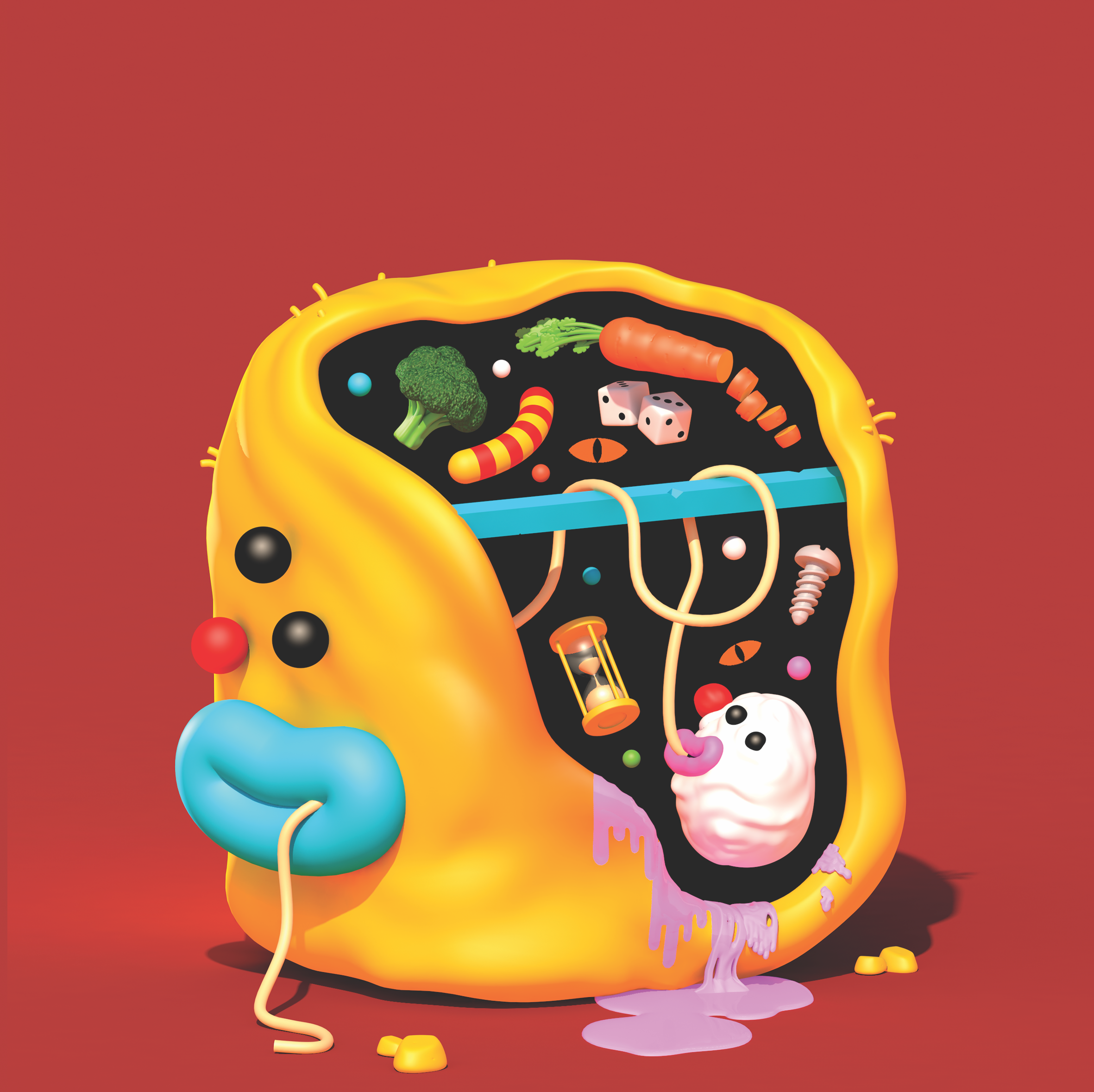
Our latest bumper summer-reading edition is a cornucopia of literary and visual delights. Packed with quality fiction, non-fiction, poetry and art, it tears through our rituals of consumption and self-gratification. And check out that cover artwork by Jordan Speer – adorable AND nutritious.
Here is the full list of contents and contributors for Issue #36:
non-fiction from Karen Allison Hammer, Lei Wang, Lian Low, Astrid Lorange, Justin Clemens, Michael Davison, Tamar Chnorhokian, Katerina Bryant, Mark Dean, Briohny Doyle, Michael Dulaney, Jana Perković, Ellena Savage, and Hayley Singer;
short fiction by Jack Vening and Anna Spargo-Ryan, and also by Wei Tianyi (translated by Michelle Deeter);
poetry by Craig Santos Perez, Chen Chen, Valeria Tentoni;
a conversation between Craig Santos Perez and Chen Chen;
comics and artwork from Lou Smith, TextaQueen, Max Baitinger, Aaron Billings, Jordan Speer, Lizzie Nagy, Nicky Minus, Max Mose, Merv Heers, Mary Leunig, Anna Di Mezza, Rachel Ang, Molly Turner, Stephen Tierney, Oscar Nimo, Jonathan McBurnie, Josephine Edwards, Rosell Flatley, and Nikolaus Dolman;
and, as always, Benjamin Law and his mum Jenny's sex and relationships advice column ‘Law School’.
Grab a copy and dig in! Subscribe to save 35% on the cover price and have our beauitful mag delivered to your doorstep.
Writing about birds is never simply about birds. They can be harbingers of hope, the way witch hazel is a harbinger of spring (Emily Dickinson: “‘Hope’ is a thing with feathers / That perches in the soul”). Or, they can be delusions induced by trauma, like Edgar Allan Poe’s raven or Max Porter’s crow (whose title, Grief is a Thing With Feathers, is a nod to the Dickinson line). Or they can provide a mirror through which to contort memory and visions of oneself, as in Alejandro González Iñárritu’s Birdman.
This is the fourth and final part in a four-part essay by Piriye Altraide. You can read the first part here and the second part here and the third part here.
Part Four
“They had looked about themselves saw nothing to contradict the statement; saw, in fact, support for it leaning at them from every billboard, every movie, every glance. 'Yes,' they had said, 'You are right.'”
The danger occurs in the transference. When the Western ideology becomes yours [ours]. With nothing else to contradict how do we stop the process? How do we even know it is happening? The frog sits in the pot of water. The heat builds over time. Over time, the heat builds. Slowly. Both indecipherably and not indecipherably. The main factor estopping resistance is not having an alternative. Not knowing there is a world outside the pot. Not knowing truth.
“We write to create, to survive, and to revolutionise; we aim to disrupt the State’s founding order of things, to disrupt the ‘patriarchal white sovereignty’… and the colonial continuum of history… to reveal what is missing in all the gaps, cracks and in-between silences we can find” – Natalie Harkin
[It is writing oneself back into the narrative. It is replacing old narratives and discourses with new ones. It is increasing presence, whether in the media or other literature, to build resistance and receptiveness.]
“I wanted people to write down more true things about me—wanted to start writing down stories about myself, making myself real: making other people see me” – Maxine Beneba Clarke.
More mirrors reflecting us back, so that we can smile, so that we can say, “I am fine. I am beautiful. Your standards of beauty are not the only ones.” More subversion, more breakage of dominant norms and stereotypes, so that the “I am beautiful” can stand. More and more contradictions to the lies. More and more re-definition.
“[A]trocities of colonisation must not be our defining point…
[W]e can choose to live beyond the genealogical scarring… To do so, we need to be present in sites that disrupt colonial narratives. Resistance. We can transcend and subvert” (Natalie Harkin again).
More overcoming, uninventing.
More becoming.
Closing Scenes:
“And they took the ugliness in their hands, threw it as a mantle over them, and went about the world with it.”
Writers and other creators of fictional worlds can no longer excuse or ignore colonialism, marginalization, and other forms of oppression. Literature can be a site of critical reflection, of critical consciousness and articulations of self – of attempts at naming and thus transforming the world. Our stories can no longer repeat the same fantasy of a White world...we must open up the discourse. ‘Diversity’ is not important – it is reality. You cannot efface reality.
But the wait has been a very long one. I battle with the young girl who became the woman who still lives inside the woman who was taught to hate herself. Two conversations and more are a-go within. If you listen, if you watch, if you read closely… you just may hear them. I’m wondering:
for the parts of me that died, for those still the walking dead, for those already destroyed by the disease of self-hate, those already crushed by the hegemony, already their own oppressors as a result of its ideology. For the parts of me still being rescued from its clutches, now that the revelations and the truth and the word have poured like lava I am wondering, with Toni Morrison, whether, at least on the edge of my town, among the garbage and the sunflowers of my town, it’s much, much, much too late...
Piriye Altraide is a Nigerian born writer, spoken-word artist and self-proclaimed dancefloor extraordinaire. Piriye’s work centres on identity, belonging and the journey to self-acceptance in the context of the African-Australian diaspora. Piriye has featured at Afro Hub, Girls on Key and for Multicultural Arts Victoria. She is a 2014 Perth Poetry Slam finalist, co-curator of RMIT’s Un-lecture series, and has had her work published in Mirrors of Africa.
Scratching your heads for something special to get the funny/smart/discerning loved ones in your life? Running low on ugly candles and tea towels to regift? Dreading the thought of dragging your corporeal form up and down a shopping centres for hours and hours?
This is the third part in a four-part essay by Piriye Altraide. You can read the first part here and the second part here.
Part Three
“The master had said, ‘You are ugly people’.”
[I was seeing beautiful dark-skinned women all around me. I was seeing pride, dignity, self-love and self-respect. I was realising within more and more the effects, but most importantly the falseness of a social construct. I was seeing more and more the extent of the lies, seeing just how blatantly they were lies — a realisation that made me nauseous. “How could I have believed this for so long?” And why are they still saying these things? I was going to the right spaces—more to the point, finally I was in a city where these spaces could be found. I was watching and reading the right media, online and in print. I was purposely seeking them out. A necessary separation and immersion was beginning. As Manal Younus explains in her TEDx talk, “Because maybe today, I might not feel like explaining myself and justifying myself and negotiating who I am.” Maybe not today. Maybe not ever.]
Representations are stigmatising. The effects of characters, and indeed other aspects of narrative, can be quite real. The representation of marginalised peoples, and especially of colonised or oppressed peoples by those who have inherited the benefits of colonisation or oppression, remains a fraught area. Much harm is caused by negative stereotypes. Students of writing and by extension, writers, need to understand that they are in essence inventing a discourse when they create characters. ‘Bad’ representation being accepted as the norm leads to more harmful representation, more stereotypes, more offensive caricatures, leaving a negative psychological effect on the people represented. Additionally it affects how “gatekeepers” judge a piece of media — that is, what gets allowed, what gets produced and filtered through the social ideological apparatuses, to be seen and recieved by society.
This is where the creative writing space and theory can do some of its greatest work. Literary practice and the arts offer a space to interrogate the racialised-archive and its role in forming national consciousness and identity. For readers and viewers, seeing one’s self represented on the page or screen can open up to them what's possible. As Justina Irelandreflects:
“In all of my reading and book devouring, not once did I read a book that featured a black girl or woman. There were no black girls slipping into fantastical worlds and saving prophesied kings. There were no dark-skinned girls facing down their serial killer boyfriends or black women falling in love with their millionaire bosses…
Magic, love, and heart-stopping action just didn’t happen for black girls. We didn’t exist in those spaces, in those books. It was an apartheid of a different kind, a literary genocide for black women, and by extension, an apartheid of the imagination. By reading those books, I began to believe that those things also didn’t and couldn’t exist for me.”
A different representation of ourselves. A complex representation of ourselves. A powerful representation of ourselves. A reclaimed and owned identity for ourselves. That’s what was possible.
Writing is a song. I see a new concerto. I had the vision: the whole thing falling and crashing yes an almighty crescendo, the whole thing a tsunami.
The piece moves with me.
Sometimes the answer is in not saying.
The piece goes round and circulates to the things that were always there and circulates back to the things that have been asked and that the piece is still asking. The things that are still being lived. Still being understood. You see, these are more than just dry words on a page, more than just black on white, more, than just exercises. More than just objectives. What you see is blood. And it is still bleeding and it is still healing and so—
I changed my mind, changed my tune, but just to look at everything as clarity pierces the cerebrum (the crescendo crashes it reaches the shore) till we get to see it’s everything one and the same all is within me the life the lived experience the things I’m trying to write—all of it they are piercing arrows (the answer is still not saying) they are in the soul until I find the animal within until it howls and rips through the page this broad question I can let it fly I can let it ravage and it will leave ashes and it will leave burns I am a dark-skinned woman and I am on voracious-vengeful-apocalyptic-destructive-holy-sanctified—FIRE.
~
Once Upon a Time, or
I Pretended to Be Brave
Has it ended yet? Is it over yet? Tell them to wait. Tell them a voice like theirs like ours is coming. Don’t worry, don’t go yet tell them not to cry not to try to scrub scrub scrub their skin away into the shower into the water to wonder wonder about bleaching and lightening isn’t that better isn’t that nice there’s a brand called “Fair and Lovely”; you know, childhood is lost before it begins.
Tell them to stay in the spaces that edify them and build them up don’t stay in the ones that slowly slowly chip away insidiously creeping in until there’s nothing left. You end up losing your backbone; a cancer has eaten you from inside out. Read the books about your heroes and heroines watch the good films oh wait: I’m sorry there weren’t those voices and stories and movies for you I’m sorry they still aren’t really there they got erased they gotten hidden they got overwritten white-washed out these Hidden Figures I’m sorry no one ever told you. I’m sorry your parents were too hard on you and didn’t make home home didn’t tell you any other truths to combat the lies you internalised the bullets swallowed I guess they didn’t know any better, either. At that time they were just trying to survive. But I’m coming just wait don’t disintegrate yet don’t fall into yourself like the stars no longer shining. Tell the little ones the ones after me the ones now that follow that will look to me to us—tell them never to be quiet tell them never to accept the bullets but to throw them back never lick the hand that beats you don’t try to be palatable, “acceptable”, in an acceptance that will never accept you. But yes yes maybe maybe that’s what I’ll do I’ll come home I’ll come straight home and I’ll write and I’ll write and I have no choice I have to make the words be and this mess— it’ll produce something and I’ll write and I’ll write that’s what I’ll do I’ll come home I’ll stay up I’ll write and it will do you good please don’t disintegrate I hope pleez I tink it may be alrdy b happning pls wayt I primise ders anthr wy to be u cn b u cn bcome….
~~~
Flying: She had to go back to Perth for this one. She had to take herself someplace she could hear her soul speak. Her mind has moved: She’s at the beach. The sand is making imprints on her palms. She’s trying to balance a notebook on her knees. The wind is blowing, but... hear that…? She gets lost in the sea. Gets lost in the 'hushhh… hushhh…', folding over and over; the waves tapping the shores. She gets lost in the water. A blue so strong it hurts.
You can read the first part here, the second part here and the final part here.
Piriye Altraide is a Nigerian born writer, spoken-word artist and self-proclaimed dancefloor extraordinaire. Piriye’s work centres on identity, belonging and the journey to self-acceptance in the context of the African-Australian diaspora. Piriye has featured at Afro Hub, Girls on Key and for Multicultural Arts Victoria. She is a 2014 Perth Poetry Slam finalist, co-curator of RMIT’s Un-lecture series, and has had her work published in Mirrors of Africa.
Hello! Welcome to this: a delightfully impromptu subscriber drive. We want you as a The Lifted Brow subscriber because we make this really great magazine and we think you should read it because we think you'll love it. We've got some truly exciting things in the pipeline for 2018 – you won't regret signing up.
WHAT EXACTLY ARE WE TALKING ABOUT?
A subscriber drive. The idea being: perhaps you’ve thought about subscribing to our magazine but never quite got there, or perhaps you already subscribe and would like to renew your subscription, or perhaps there’s someone out there who you’d like to buy a gift subscription for this holiday season? Here’s the best chance you’ve ever had.
WHAT CAN YOU WIN?
A Melbourne getaway package! Use it on a weekend, use it mid-week, use it any way you want. It’s yours to use, if you win. One lucky person gets it all.
What the package includes:
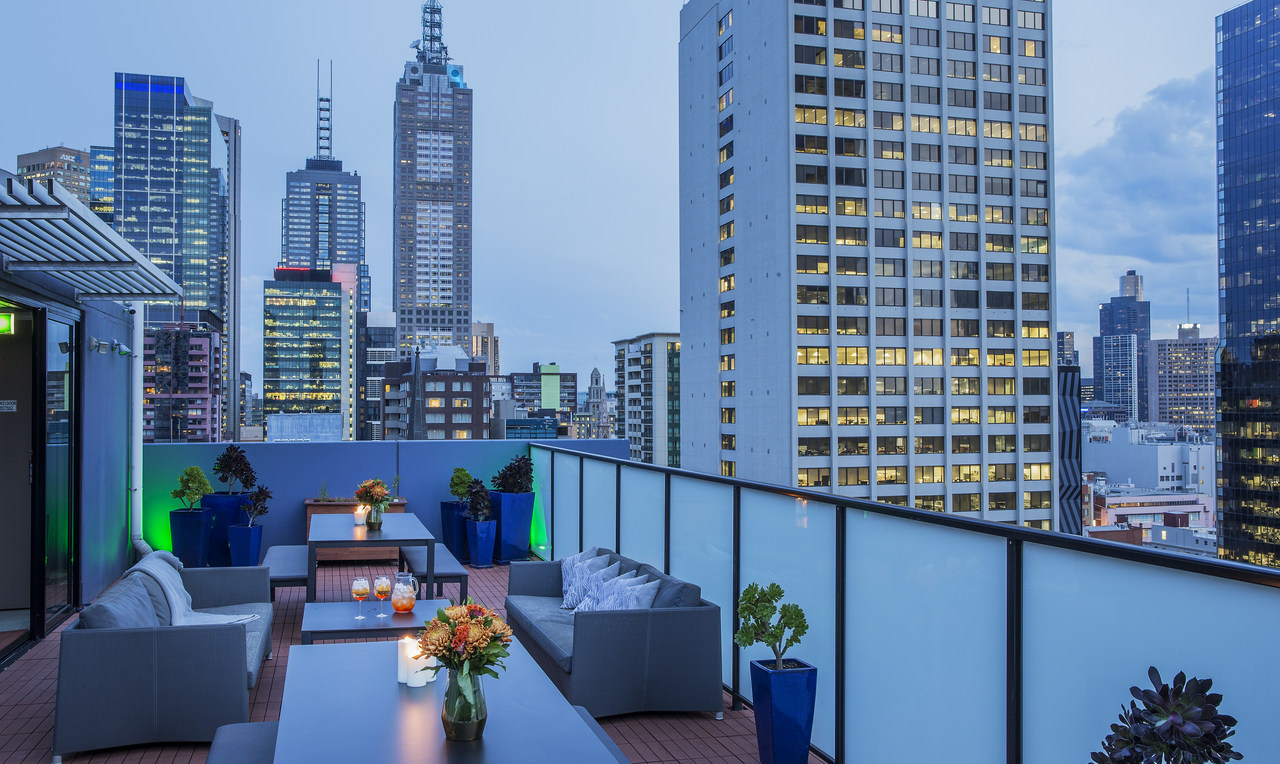
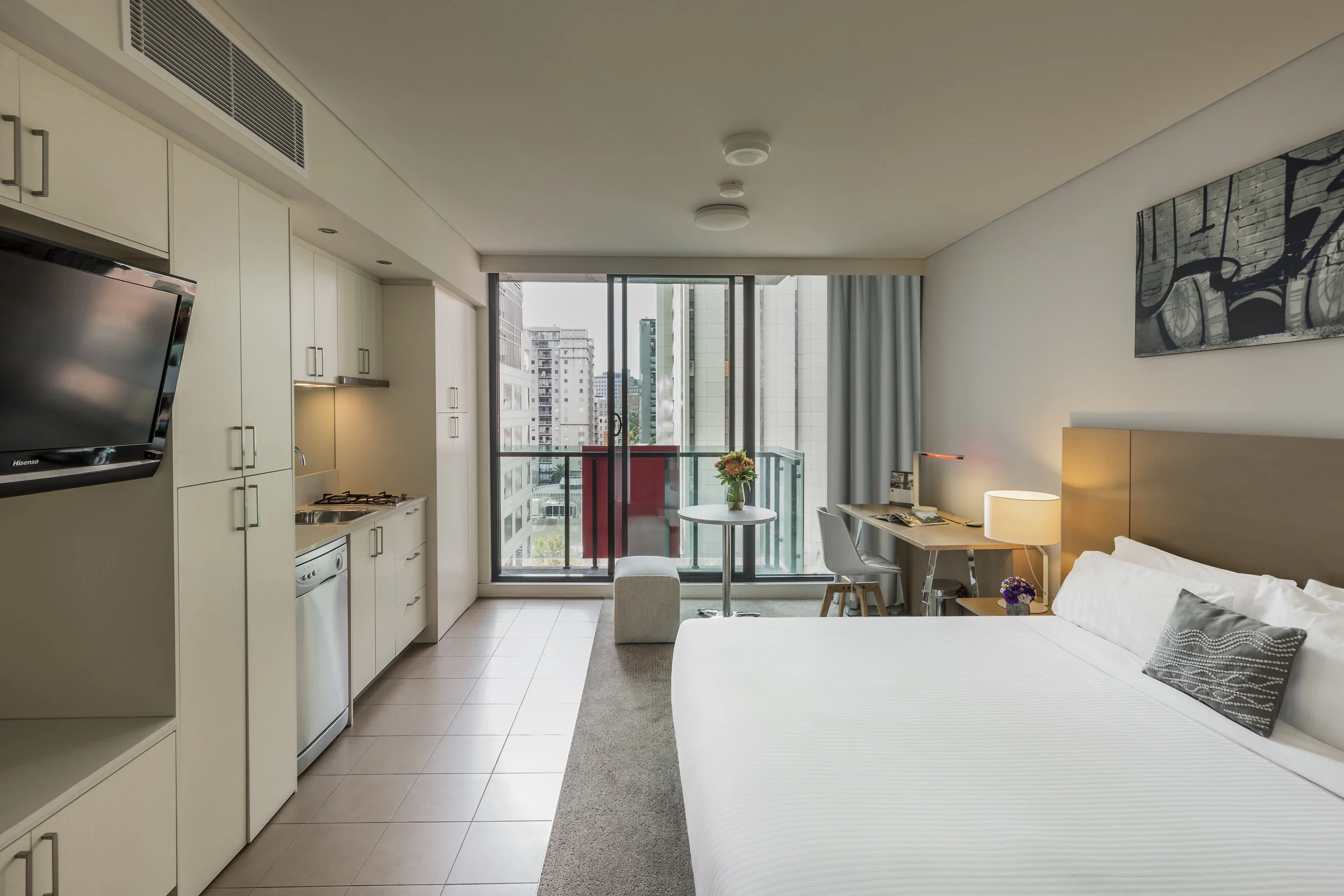
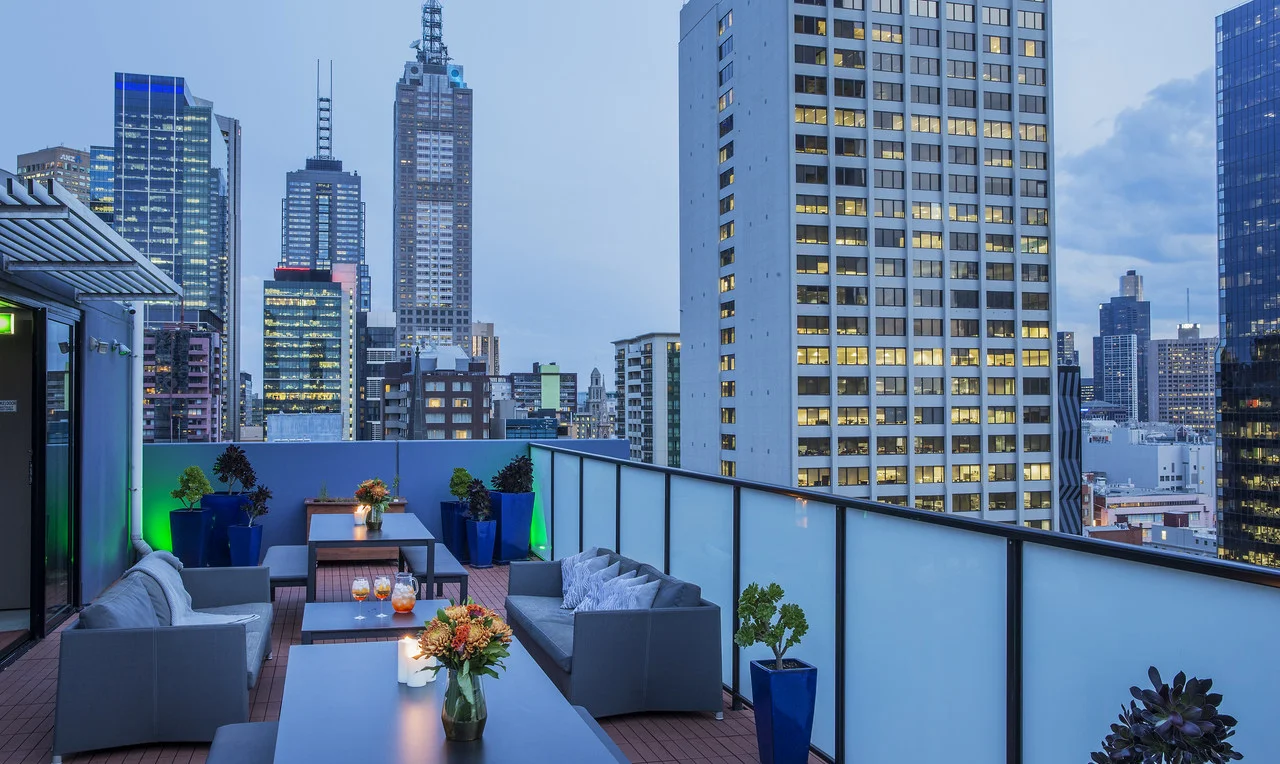
Two consecutive nights at Fraser Place Melbourne , for you (and, if you want company, a partner/lover/friend/lucky stranger), staying in a Deluxe Studio Suite (worth $519 a night). Stay whenever you want (subject to availability)
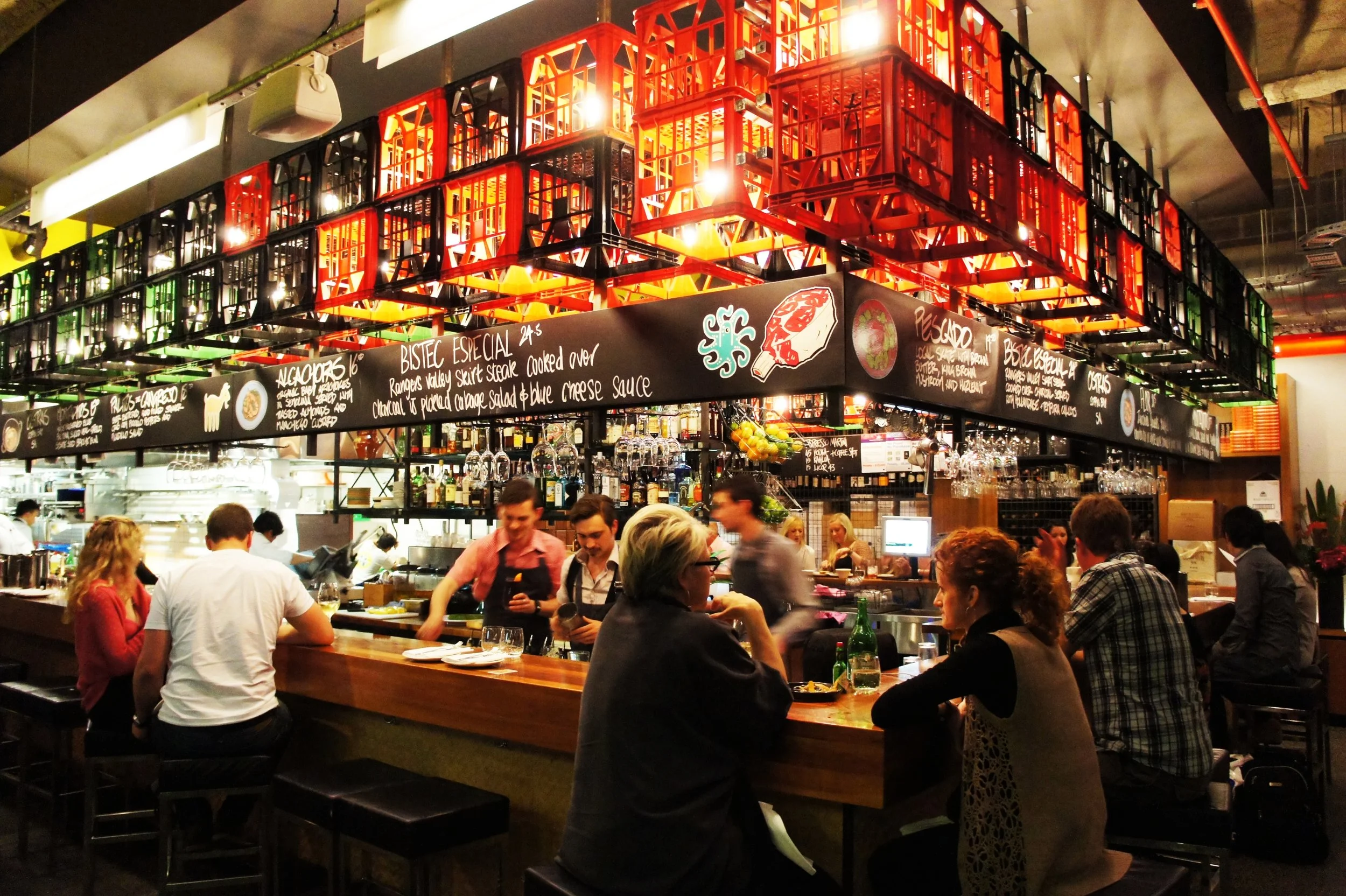
A $100 voucher to use at MoVida (spend the $100 on drinks and/or food)
A $50 voucher for our favourite local cafe and coffee dealer, Queensberry Pour House (to spend on food and drinks) plus a 250gram bag of their special Backgammon Blend roast
Note: if you purchase a one-year subscription, you have one chance at the prize. But if you buy a two-year or three-year subscription, we will put your name in the figurative hat twice or thrice, respectively.
Also: dual subscriptions count too! So if you choose your TLB print subscription to also come with a subscription to Overland or Island or Meanjin or Griffith Review or Southerly or Westerly, you will still go in the running for this prize.
Do any of the above before midnight AEST December 14th to be in the running.
People in Australia as well as people not in Australia: you are all of you eligible! Mainly because this prize does not include airfares, nuh-uh.
The print format is expensive to print, especially because we believe in printing locally and environmentally sustainably (using alcohol-free vegetable-based inks on FSC Chain of Custody certified paper, which is monitored from the paper mill to the end user). This high-quality full-colour format is slowly paying dividends: our magazine is now distributed in more places than ever before, sharing shelf space with larger-budget magazines. We believe it is now very important to be able to match the excellence of the work from our contributors with the print quality of the publication, and our readers have been telling us the same.
And we always have been and always will be committed to paying contributors, which costs a lot when we have about forty contributors each and every issue.
And the postage costs to send our magazine out to people around Australia and the world are phenomenally huge, because Australia Post is the mafia.
And running a not-for-profit literary organisation just costs money, all the time, for so many small things, all the time.
Also: we are committed to giving all our contributors every opportunity to be read by as many people as possible. We do this through our national and international distribution deals, and by making the magazine accessible digitally, and by running launch events, and by sending the magazine to subscribers. Acquiring new subscribers is a key way to increase our readership, and give our contributors the biggest audience possible.
In turn, we’re also super committed to providing our subscribers with the best possible reading experience, because we don’t want charity: we want you to subscribe because you want to read what we publish.
Please know that this subscriber drive is not a desperate cry for help – it is just a reminder to everyone that we need subscribers in order to keep on keeping on. We’re waving, not drowning.
As such, we are not asking you to ‘donate’. We are simply asking you to barter, to enter into a friendly trade: some of your dollars in exchange for 512 pages of writing and artwork per year (four issues at 128 pages per issue).
WHEN IS THIS THING HAPPENING?
Right now, until the stroke of midnight on December 14th (Australia Eastern Standard Time) 2017. Purchase any kind of subscription before then and you are automatically in the running to win.
Remember: current subscribers who are in the middle of a subscription can still enter, simply by choosing which issue in the dropdown menu you’d like your renewal to begin with (i.e. the issue after your current subscription expires).
This is the second part in a four-part essay by Piriye Altraide. You can read the first part here.
Part Two
“And they had each accepted it without question.”
As this is the pernicious nature of the ideologies. That internalised form of social control, making certain views seem ‘natural’ or invisible, such that they hardly seem like views at all, just ‘the way things are’. Values and assumptions implicit, often unrecognised, yet permeating all the artefacts and culture of a given time, entering and shaping our national discourse.
And they can eventually destroy you — a slow, psychological death. If you are lucky, the death may be mitigated earlier than later. Or you may die, and not know you have died, or deny that you have died and keep pressing on as if your way of “dealing with it” is okay, and then much later discover the death, and then begin the journey of trying to recover and resurrect that which had died, and grieve for wasted time. But how will you know if nobody tells you? What does one do when life commences without even a chance for the ego? Begins in rejection, on-going humiliation and self-loathing? These are the "the far more tragic and disabling consequences of accepting rejection as legitimate, as self-evident” (Toni Morrison).
The issue of racialized beauty intersects and interrelates with that of representation, of whose umbrella it sits under. [Here, the hydra is at work]:
There is a clear link between representation and perception. A lack of 'diversity' not only influences how diverse peoples see themselves, but how they are seen (or not seen) by those of the dominant culture. It is not simply about the amount of representation but the type — and recurrence of that type. The fact that there is a long history of distortion of marginalised identities in narratives written about the (so-called) “other” does not help. Literature (and by extension other creative/narrative mediums) can be windows, mirrors and sliding glass doors. As windows, they offer "views of worlds that may be real or imagined, familiar or strange". They are also sliding glass doors, through which the reader can "walk through in imagination to become part of that world". And they can be mirrors, transforming human experience and reflecting it back to the reader, allowing them to see their lives and experiences as part of a larger human experience. This is why then, "reading (and viewing) become a means of self-affirmation. We seek ourselves, our mirrors, in books, story and literature."
Ironically and paradoxically, fiction can be most powerful for this because of its necessary 'truth'. It can be easy to say ‘truth’ is conceptually out of vogue, that Roland Barthes’s author is dead, and the text is now about reader response. Even its name announces artificiality, yet it must somehow be true to hold the interest of its readers, telling them about experiences both imaginary and relevant to their own lives. It is this deeper “truth” that is so poignant. The power of this truth, the power of stories to move audiences, is what allows the building of empathy, the bridging of gaps, the illuminating of suppressed and erased voices. The understanding of lived experiences that are very manifest, very now, very here. Writing provides the opportunity to enter another’s world. Indeed the call to arms is essentially this: all narrative has the power to impact culture and individuals...it's up to creators to choose.
And as creators we will choose. Most hallowed be the taking up of tools, the reclaiming of stories, the language we will express them in. Most hallowed be understanding the lived experiences. Translating them into language. Making them palpable. What we may call:
Theory: as a role player in the transformation of human societies.
Theory: as a means to uninvent the world.
Theory: behind a movement. Behind art. Art: an active element in such change.
Theory overlap theory intersect theory cross over theory—
deliver the struggle of men and women to free themselves.
Most hallowed be our words. “Writing is indeed one of the most powerful tools of protest which can allow us to transcend, to live passionately, imaginatively and creatively beyond embodied and genealogical pain” writes Natalie Harkin. “Our words are weapons, our books are time bombs, already breaking down the many barriers on their way across the world”.
To resist. To uninvent. To empower. To take control.
To write our own bodies. To possess our own voices. To re-label. To remake.
To “speak loud, speak unsettling things and be dangerous...” – Natalie Harkin
I am a dark-skinned woman. My skin is kissed by the sun. They say, the good words say, it is Nubian queen. It is goddess skin. Non-ageing, exotic beauty. I am a dark-skinned woman.
~
A good chat. A long chat. A complex chat, collapsing and unmerging and folding and unfolding over itself. It-Self.
~
I am overcoming. I am becoming. I’m in the process.
~
It’s a daily psychological battle.
~
There are continuous narratives, obvious and not so obvious narratives. Subliminal and pronounced narratives. Narratives in TV shows and in novels. In movies, as well as plays and video games. In advertising just as much as social and new media. In social conventions and attitudes and behaviours and snatches of dialogue.
Sometimes I’m kicking underwater.
“But our bodies too are archives where memories, stories, and lived experiences are stored, etched and anchored in our bloodlines deep. They ground our creativity in what become personal and political acts of remembering, identity making and speaking back… re-map events and landscapes, piece together lives
fragmented
heal
wounds”
– Natalie Harkin
Healing is two steps forward, two steps back. I’m assessing the damage. You need to be rescued before you can breathe. But first you need to know you’re drowning.
I am a dark-skinned woman. Doubly oppressed—subjugated by patriarchal family, dysfunction, subjugated by society in two and more parts: Stay there. Don’t move—we want you to stay. down. there. Which means it is hard for me to extricate which part of my past is playing up when I sit nervous in a café, warding off a panic attack, waiting for my coffee. Thinking the man next to me is judging me. Thinking me stupid and insecure and weird and horrible and undesirable and unattractive. Noticing the awkward placement of my bag, my stumblings, my indecisive, uncertain movements. That he is just singing the same song as everybody else, the ‘forever tune’ placed in my head: You are undesirable you are bottom of the ladder bottom of the ladder bottom of the ladder.
~
(And halt. I’m thinking):
… Which isn’t to say this is every dark-skinned woman’s experience. Which isn’t to say it’s always or has always been like this, even for me. It’s never one way or straight forward or easy or “one size fits all”. Be careful of the single story, dear Reader. Again, the nuances. The individualities.
But this is to say that we, women like me, are all impacted by the same hegemony and colonialist attitudes and perceptions in different ways and to varying extents. Some worse than others, some being able by circumstance and placement and fortune to be shielded or supported more so than others. By the fortune of exposure to better education about themselves. By community, family, more tolerant country or society.
And,
This
Is… also what I’m thinking (excuse my mind as it runs ahead. Or don’t excuse it):
At the end of the day, when all is said and done, this piece— poem-ish, story-ish, essay-ish— will be swallowed up by them and maybe move them ever so slightly but then disappear. The fatigue in trying to appeal to wider society. Whiter society. As a good woman in a good space said, “All that energy wasted on trying to change other people’s minds, we can spend on building up ourselves.” That’s what I think that’s what I think that’s what I think. And even what I have produced, late and jaded and broad it’s… well I’m not entirely sure what it is. But…
I should be here tomorrow. Early in the morning, perhaps. I’ve seen the start of something. I’ve seen the start of many things. Sometimes they stay, in my mind, as something true. Something self-evident. Such that it will negate the “truths” of before. Sometimes they don’t stay and they shift and stir. Saplings in the wind. Sometimes get bent and trampled.
And so I sit.
You can read the first part here, the third part here and the final part here.
Piriye Altraide is a Nigerian born writer, spoken-word artist and self-proclaimed dancefloor extraordinaire. Piriye’s work centres on identity, belonging and the journey to self-acceptance in the context of the African-Australian diaspora. Piriye has featured at Afro Hub, Girls on Key and for Multicultural Arts Victoria. She is a 2014 Perth Poetry Slam finalist, co-curator of RMIT’s Un-lecture series, and has had her work published in Mirrors of Africa.